
Uncategorized
Flying Horse Cart Authenticity Guide: How to Identify Genuine Products
Oct
Flying Horse Cart Authenticity Guide
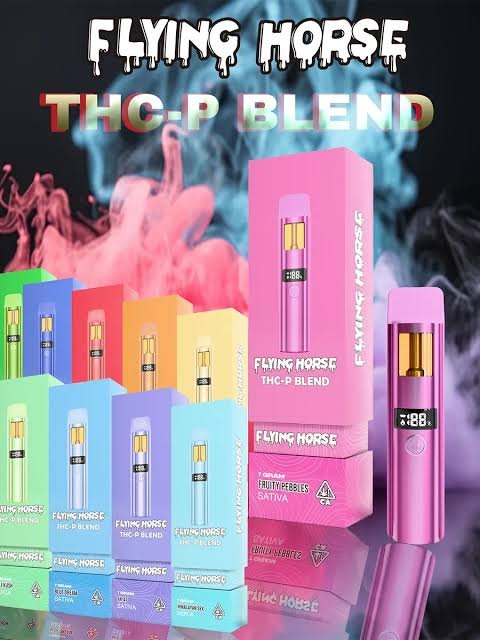
Knowing how to evaluate a Flying Horse cart is important for consumers who want reliable product information and greater awareness of counterfeit risks. Online searches for terms such as Flying Horse cart authenticity guide, how to identify genuine Flying Horse carts, and fake vs. authentic Flying Horse carts reflect the importance of checking product packaging, labeling, and manufacturer information before making decisions.
This guide explains practical ways to assess a Flying Horse cartridge, recognize potential warning signs, and understand why packaging alone cannot guarantee authenticity.
1. Examine the Product Packaging
One of the first steps in a Flying Horse cart authenticity check is to examine the packaging carefully. Look for clear printing, consistent product information, legible labels, and packaging that appears professionally assembled.
Misspelled words, inconsistent logos, blurry graphics, damaged seals, or conflicting product names may indicate a problem. However, packaging quality alone is not conclusive proof that a product is genuine or counterfeit. Packaging can change between production runs, and counterfeit products can sometimes imitate original designs.
Compare the information on your package with information published through a verifiable, official brand source, where available.
2. Check Batch Numbers and Product Codes
A batch number, lot number, or product identification code may help a manufacturer or authorized distributor investigate a product’s origin. If your Flying Horse cart includes this information, check whether it is readable and consistent across the package and accompanying documentation.
Where an official verification service exists, use it directly rather than relying on an unfamiliar third-party website. If the code cannot be verified, contact the manufacturer or a confirmed authorized distributor for clarification.
Remember that a printed QR code or serial number is not proof of authenticity by itself. Counterfeit products may copy valid codes, and legitimate products may use different labeling systems.
3. Review Ingredients and Product Labels
A genuine-product assessment should include a careful review of the label. Check the product name, listed ingredients, cannabinoid information where applicable, manufacturer details, warnings, and other required disclosures.
Be cautious when a Flying Horse cartridge has missing ingredient information, contradictory potency claims, or labeling that does not match the product description. Do not assume that a product is safe simply because it has professional packaging or lists a particular cannabinoid concentration.
For products containing cannabis-derived or other regulated substances, applicable labeling and testing requirements depend on the jurisdiction. Verify the relevant rules before relying on a product’s claims.
4. Look for Independent Laboratory Testing
Independent laboratory testing can provide useful information about a cartridge’s contents. Depending on the product and local requirements, relevant testing may examine cannabinoid concentration, contaminants, residual solvents, pesticides, or heavy metals.
If a certificate of analysis is provided, check the laboratory’s identity, report date, sample description, batch number, and reported results. When possible, confirm the report directly with the laboratory using independently verified contact information.
A certificate that cannot be authenticated, does not match the product batch, or comes from an unverifiable source should not be treated as proof of quality. Testing also has limitations: a report for one sample does not automatically establish the contents of every cartridge in a batch.
5. Be Careful With Unusually Low Prices
Price can be a reason to investigate further, but it is not a reliable authenticity test on its own. Deep discounts, pressure to buy immediately, vague seller details, and claims of guaranteed authenticity without supporting evidence can all warrant caution.
Before trusting an online seller, review its business identity, contact details, return policies, and authorization claims. Seek confirmation from a verifiable brand source where possible. Do not rely exclusively on social media comments, anonymous reviews, or seller-provided photographs.
6. What Should You Do If a Cart Seems Fake?
If you suspect that a Flying Horse cartridge may be counterfeit, do not use it to test whether it is genuine. Keep the packaging and purchase receipt, photograph the product details, and contact the seller or manufacturer through verified channels.
If the product’s contents or origin cannot be confirmed, the safest option is to avoid using it. Stop using a cartridge if it leaks, appears damaged, or behaves unexpectedly. Seek medical advice if you experience concerning symptoms after exposure.
Frequently Asked Questions
How can I tell if a Flying Horse cart is authentic?
Review the packaging, batch information, product labeling, seller credentials, and independently verifiable testing records. No single visual feature guarantees authenticity.
Does a QR code prove that a Flying Horse cart is genuine?
No. A QR code can be copied or lead to an unofficial website. Confirm its destination and verify the product details independently.
Are all Flying Horse carts packaged the same way?
Not necessarily. Packaging can vary by product, market, or production period. Confirm differences through a reliable brand source rather than assuming every variation is counterfeit.
Can I verify a cartridge by its appearance or oil color?
No. Appearance, color, thickness, and smell cannot reliably establish a cartridge’s contents, purity, or authenticity.

Pingback: How to Identify Genuine Flying Horse Carts | flying horse carts